Unattended Death Cleanup Across Clark County, Nevada
Whatever took on fluid comes out, so the smell doesn't stay behind. Days and heat set the size of the job, and the walk-through shows both.
An unattended death in Clark County goes to the Office of the Coroner/Medical Examiner, whatever the cause, and once the investigator has finished, the room is left for the family or the owner.
Las Vegas Bio Clean sets up decomposition cleanup by a licensed, insured crew, indoors or in a vehicle, in Las Vegas, Henderson, North Las Vegas and Boulder City. If you found this page today, you've probably got a key in your hand and a door you don't want to open. You don't have to open it. Keep it shut, and call when you're ready. We'll talk through the air conditioning on that call.
Las Vegas heat moves the timeline up
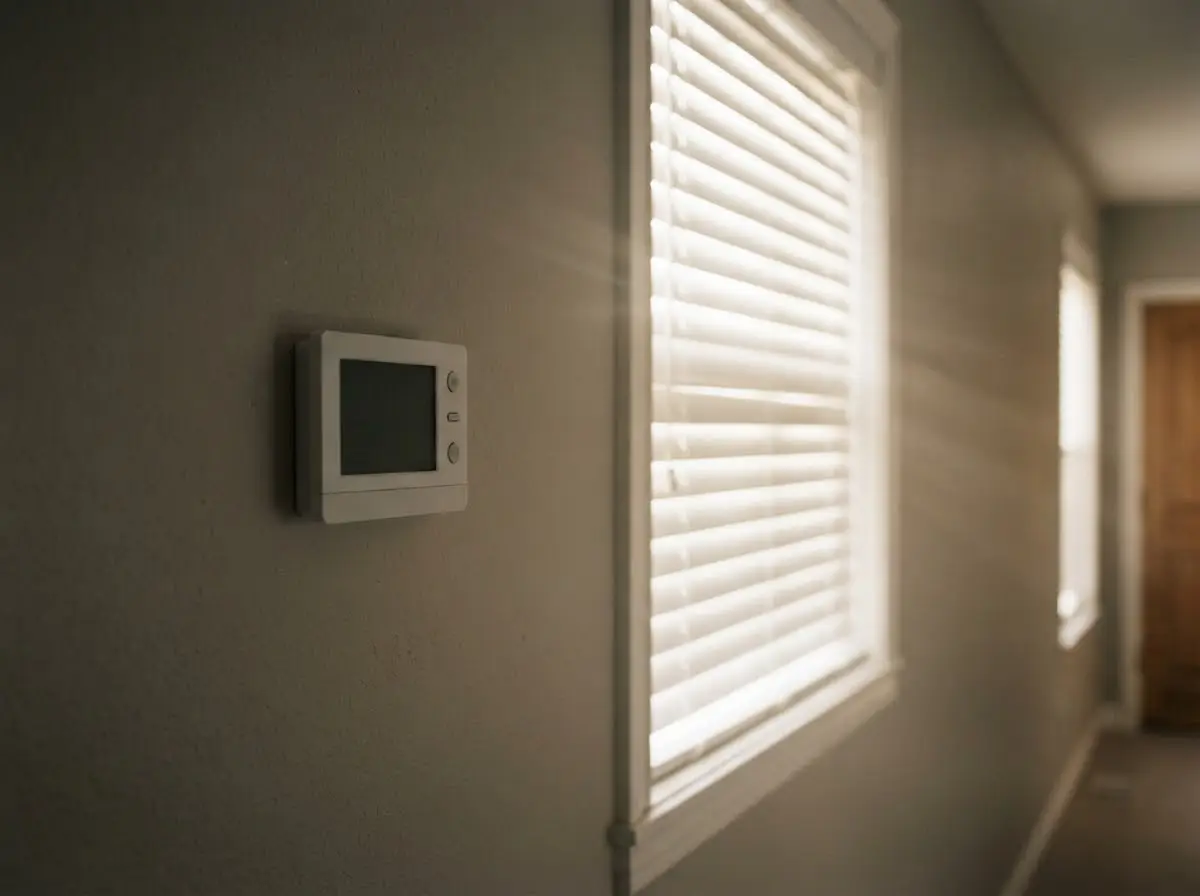
Forensic work ties the pace of decomposition closely to time and temperature together. A study of 189 southern Arizona cases found it was often rapid indoors, so the desert's dry air may not help inside a closed house.
- 104.5°F
- Normal July high at Harry Reid airport, 1991 to 2020
- 82°F
- Normal July low, so a house without cooling never gets a cool night
- 112 days
- At 100°F or above in 2024, with 22 nights that never dropped under 90°F
Say on the call whether the cooling was running when the person was found, and what the thermostat read if anyone noticed. It's one of the first things that shapes the plan.
Days before discovery set how far fluid traveled
This is a rough outline, not a measurement, and warm months sit further down the table sooner. Your walk-through sets the real scope.
| Found after | What the crew usually finds | What usually comes out |
|---|---|---|
| A day or so | Fluid on bedding or a chair, and little or no odor past the room | Mattress or chair, and any carpet and pad directly under it |
| Several days | Fluid through the pad to the subfloor, and odor through the house | Carpet and pad, cut wider than the stain, baseboard, sometimes lower drywall |
| A week or more, or any stretch in a hot house | Subfloor or slab stained, walls wicking, odor in soft goods and possibly the air system | Subfloor sections, drywall, soft furniture and clothing near the room, duct work on the scope |
| Weeks | Staining deep in the floor and walls, and on the level below in a two-story | Larger floor and wall sections, plus a check of the unit or ceiling beneath |
Each row costs more than the one above, because more material goes out and more of it leaves as medical waste. The cost guide lays out those drivers, and the death odor page explains why the smell follows the fluid.
Your home type changes the walk-through
Stucco house on a slab
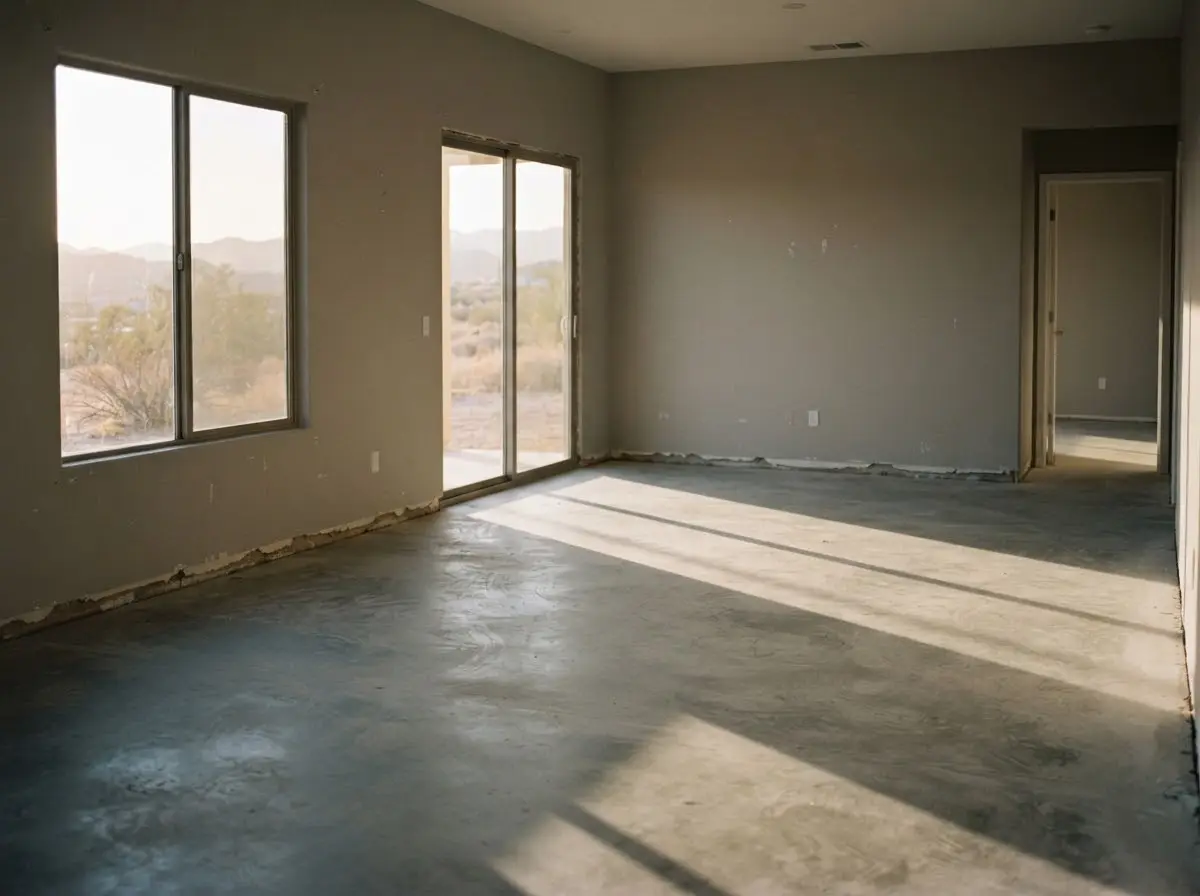
Where a house sits on concrete, carpet and pad come up, and the bare slab can usually be cleaned and sealed instead of removed, unless it has soaked in badly at a crack or control joint. Baseboards and the bottom of the drywall get checked for wicking.
Two-story house or apartment
Fluid on an upper floor can reach plywood, joists and the ceiling below. The crew looks at that ceiling and at the unit underneath. If there's another household down there, the shared-air page covers their side of it.
Mobile home
Floor panels are thinner, and the belly insulation under them can take on fluid. The walk-through includes a look from underneath when the skirting allows it.
Car or truck
A vehicle gets its own scope. Vehicle biohazard cleanup goes through seat foam, carpet and the cabin filter.
The coroner's release comes before the crew
The coroner's investigator looks into the death and arranges for the person to be taken into care. The office says release to the mortuary you name normally happens within 24 to 48 hours of the examination. None of that covers the room.
Personal effects the investigator removes go on a property receipt, and you pick them up by appointment. What stays in the home stays until someone with authority deals with it. When the person lived alone and no relative is at hand, the county Public Administrator may step in to secure the place.
Before the crew arrives, leave stained items where they are and don't use fans to clear the smell, since that pushes it into more of the house. The first 24 hours guide has the coroner's address and the order of calls.
Questions from families and executors
Can I go in and get a few things first?
I live out of state. Can this be handled from a distance?
The county has sealed or secured the house. What now?
How long does the cleanup take?
Days and heat are the crew's first questions
On the visit, the crew lifts a corner of the flooring, checks the walls and the vents, and writes down what has to go.
Call(725) 745-8630Have these on hand
- About how long before the person was found
- Whether the cooling was on in the house
- Who holds the keys and can approve the work